
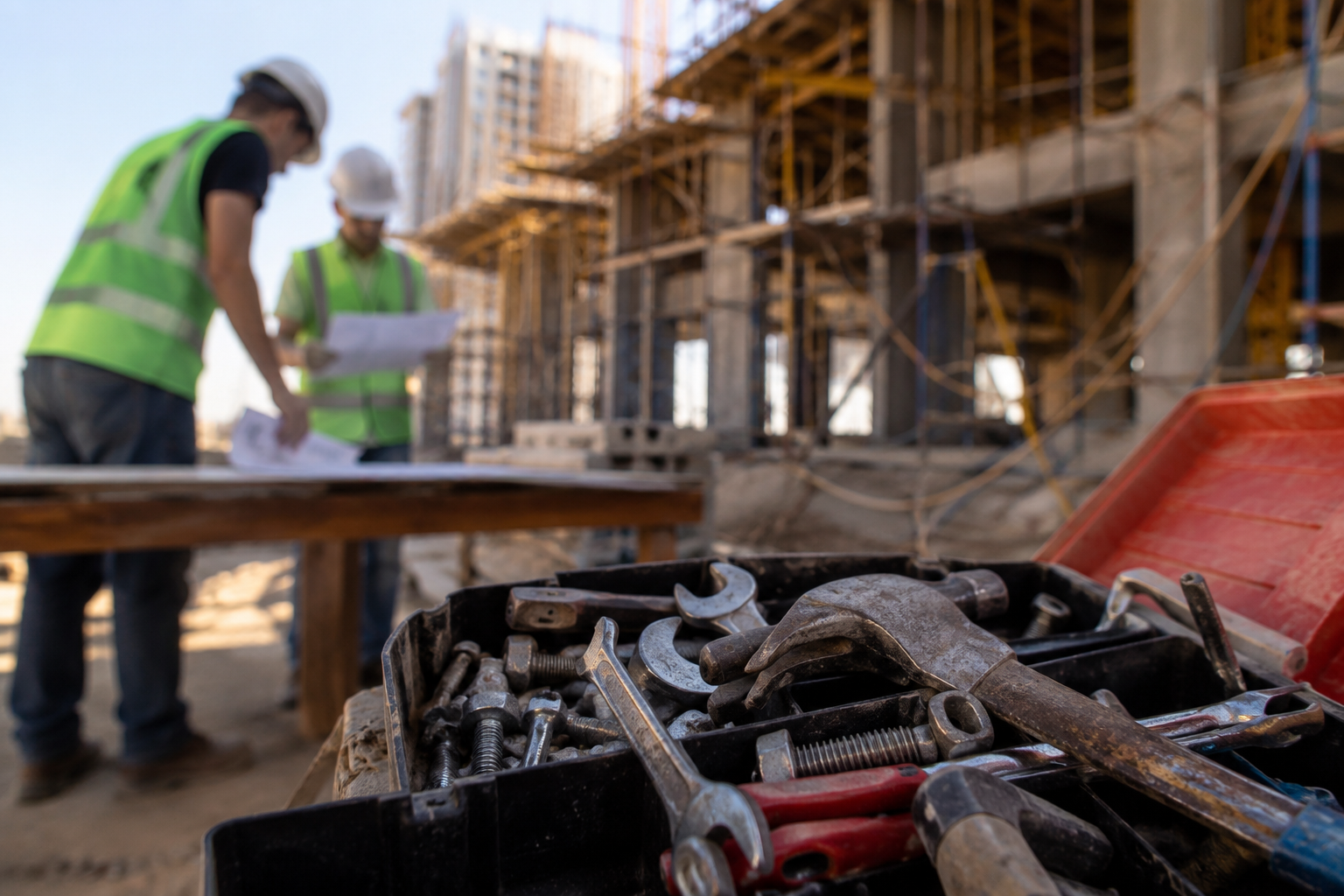
A busy construction site rarely gives workers the luxury of searching for a missing screwdriver, wrench, or measuring tool. When a technician needs equipment, it needs to be within reach, protected, and easy to carry. That is why choosing the right tools box is about much more than storage.
For construction companies, maintenance teams, workshops, and industrial workers across the UAE, a well-designed toolbox can help organise equipment, protect valuable tools, and make daily work more efficient. But with so many sizes and designs available, how do you decide which one actually fits your needs?
Start With the Type of Work
The best toolbox depends on the job.
A technician who performs electrical maintenance may need a compact case with dedicated compartments for screwdrivers, pliers, testers, and small components. A construction worker handling heavy-duty hand tools may need a larger, reinforced box with greater load capacity.
Before buying, think about the tools you normally carry. Make a simple list of your frequently used equipment and consider their dimensions and weight.
This prevents a common mistake: buying a toolbox that looks spacious but cannot comfortably accommodate the tools you actually use.
Choose the Right Material
Toolboxes are commonly made from plastic, metal, or combinations of different materials. Each option has its advantages.
Plastic Tool Boxes
High-quality plastic models are lightweight, easy to transport, and resistant to moisture and corrosion. They can work particularly well for technicians who regularly move between locations.
However, the quality of the plastic matters. Cheap materials may crack under heavy loads or harsh handling.
Metal Tool Boxes
Metal toolboxes are often preferred for demanding industrial and construction environments. They can provide excellent strength and durability, particularly when carrying heavy tools.
The trade-off is weight. A large metal box filled with equipment can become difficult to move around a busy worksite.
Modular Tool Storage
For larger teams, modular systems can be useful. Drawers, removable compartments, organisers, and stackable cases allow workers to build storage around their specific requirements.
Consider Size and Storage Capacity
Bigger is not automatically better.
An oversized toolbox can become unnecessarily heavy and difficult to transport. On the other hand, a box that is too small can leave tools piled together, making it difficult to find anything quickly.
Look for practical features such as:
Removable trays
Adjustable compartments
Deep storage sections
Small-parts organisers
Strong handles
Secure latches
Stackable designs
Space for frequently used power tools
A good toolbox should allow you to organise equipment rather than simply contain it.
Durability Matters on UAE Jobsites
Construction and industrial environments can be demanding. Tools may be exposed to dust, heat, moisture, impacts, and frequent transportation.
For UAE users, durability deserves particular attention. A toolbox that spends most of its life inside a workshop has different requirements from one transported between construction sites every day.
Look for reinforced corners, strong hinges, reliable latches, sturdy handles, and materials suitable for regular professional use.
If the box will be transported in a service vehicle, also consider whether it can withstand vibration and movement without opening or damaging its contents.
Think About Portability
A toolbox should make work easier, not become another burden.
If technicians frequently climb stairs, move around large facilities, or travel between different work areas, portability becomes especially important. Compact boxes with comfortable handles may be more practical than large storage chests.
For heavier equipment, wheeled tool storage can be a better option. It allows workers to move larger collections of tools without carrying the entire load.
The right balance depends on how far the toolbox needs to travel during a normal working day.
Security and Tool Protection
Professional tools can represent a significant investment. Leaving them loose or poorly protected can increase the risk of damage or loss.
A good tools box should keep equipment organised and protected from unnecessary impacts. Secure latches or lockable designs can provide an additional layer of protection when tools are stored in vehicles, workshops, or jobsite areas.
Internal padding or fitted compartments can also help prevent delicate equipment from knocking against heavier tools.
Don't Forget Maintenance and Organisation
Even the best toolbox becomes ineffective if everything is thrown inside randomly.
Organise frequently used tools in easily accessible compartments. Keep smaller accessories together, and avoid placing sharp or heavy equipment where it can damage other items.
It is also useful to inspect the toolbox regularly. Broken latches, cracked handles, damaged trays, or loose hinges should be addressed before they become a bigger problem.
A little organisation can save several minutes throughout the day, especially when the same tools are used repeatedly.
Conclusion
The best tools box is not necessarily the largest, heaviest, or most expensive option. It is the one that matches your tools, working conditions, mobility requirements, and storage needs.
For construction and industrial professionals in the UAE, focus on durability, organisation, portability, security, and practical capacity before making a purchase. A well-chosen toolbox can protect valuable equipment while making everyday maintenance and construction tasks more organised.
Looking for dependable tool storage for your workplace or jobsite? Explore professional toolbox options and choose a solution designed around the way your team actually works.
FAQs
What is the best toolbox for construction work?
The best option depends on the tools, workload, and working environment. For heavy-duty construction, a durable metal or reinforced professional toolbox may be suitable, while mobile technicians may prefer lightweight or modular designs.
Should I choose a metal or plastic toolbox?
Choose based on your priorities. Metal generally offers strong durability and load capacity, while quality plastic models are lighter and easier to transport.
What size toolbox should I buy?
Choose a size that comfortably accommodates your current tools while leaving some room for future additions. Avoid buying an oversized box simply because it offers more storage.
Are modular toolboxes useful for industrial work?
Yes. Modular systems can make it easier to organise different tool categories and transport equipment between work areas. They are particularly useful for teams with varied tool requirements.


.jpg)
Write a comment ...